Rethinking Waldorf Education
Exploring the strengths, challenges, and research behind this century-old approach to learning.

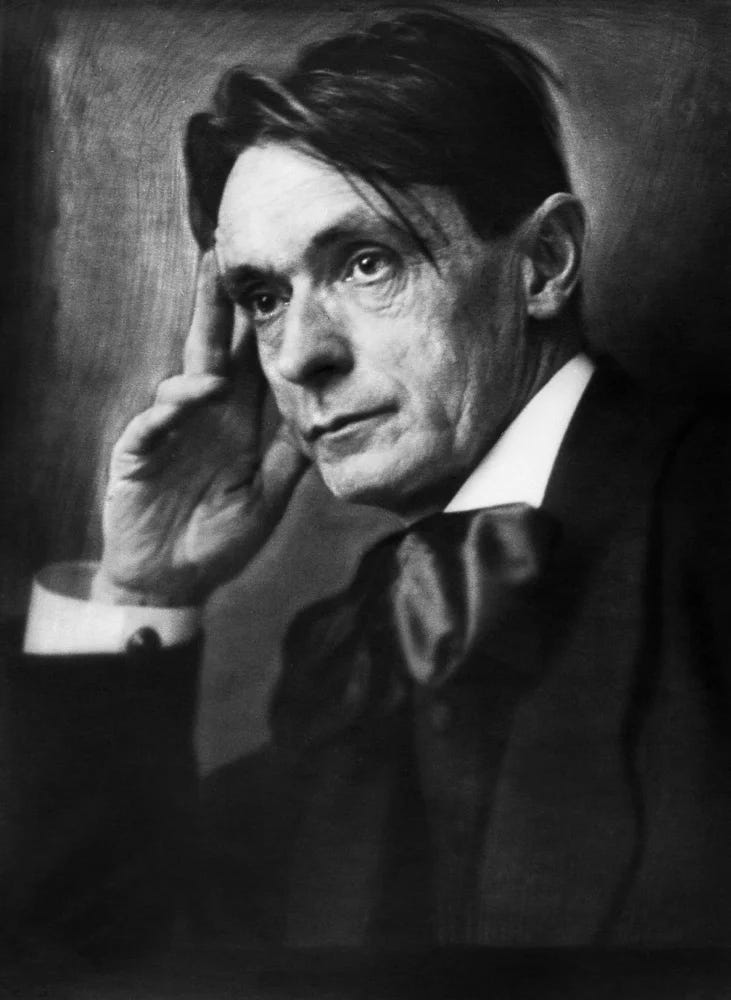
“Ultimately all knowing, from the highest to the lowest, is the result of experience, it arises on the way of experiences.”
-Rudolf Steiner
Today we’re diving into Waldorf education, one of the most influential and sometimes misunderstood educational philosophies. In this post, we’ll explore Steiner’s vision, the core elements of Waldorf classrooms, and what makes this approach both inspiring and challenging for children today.
Quick review of the lens I’ll use to evaluate each approach (feel free to skim if you want!):
Assessment Criteria
Relational Foundation – Does it honor secure attachment and emotional safety? How are adult-child and peer relationships nurtured?
Respect for Developmental Readiness – Are social, emotional, cognitive, and physical timelines honored? Is the child seen as a whole being?
Intrinsic Motivation and Curiosity – Does it encourage self-directed learning and exploration without external rewards?
Environment and Rhythm – Does the space support independence, sensory engagement, and calm? Is the daily rhythm balanced for movement, focus, and rest?
Role of the Adult – Is the adult a guide, co-learner, and model for empathy and reflection?
Community and Belonging – Are cooperation, inclusion, and shared responsibility emphasized?
Long-Term Wellbeing and Lifelong Learning – Does it cultivate resilience, creativity, critical thinking, and compassion?
Overall Alignment: Moderate-High
What draws so many people to Waldorf isn’t just the curriculum, it’s the atmosphere, or for my 2025 babes, the vibes. Waldorf was born out of a moment in history when the world felt broken. Post–World War I Germany was reeling from loss, instability, and social upheaval, and Rudolf Steiner offered a vision of childhood that felt almost sacred. His belief that children deserved beauty, rhythm, and wonder in their days resonated deeply with families who wanted schooling to feel human again.
Steiner saw childhood as something to protect, not rush through. In the early 1900s, when education was dominated by strict discipline and early academics, he insisted that young children needed stories, movement, handwork, music, and time in nature long before they needed textbooks. His respect for imagination reminded me that learning can be playful and full of wonder. An approach that may have been countercultural then but feels intuitive to how children naturally develop.
And Waldorf environments truly are beautiful. Soft colors, natural materials, gentle rhythms, seasonal rituals, there is an intentionality that create a sense of care. The slow, sensory-rich approach supports presence in a world that is constantly overstimulating and rushed.
At the same time, the heart of Waldorf is tied to Steiner’s spiritual worldview. Some ideas like strict age-based grouping, delayed literacy, highly prescriptive curricula, and emphasis on teacher authority don’t always align with what we know about attachment, neurodiversity, or evidence-based learning. Spiritual elements like karma, reincarnation, and eurythmy can feel confusing or exclusionary. Depending on the teacher and how literally Steiner’s teachings are followed, classrooms can be imaginative and nurturing, or rigid, dogmatic, and outdated.
